-
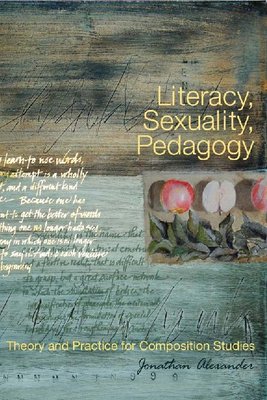
Literacy, Sexuality, Pedagogy: Theory and Practice for Composition Studies
Jonathan Alexander
Despite its centrality to much of contemporary personal and public discourse, sexuality remains infrequently discussed in composition courses and in our discipline at large. Moreover, its complicated relationship to discourse, to the very language we use to describe and define our worlds, is woefully understudied in our discipline. Talk and writing about sexuality surround us. Not only does the discourse of sexuality surround us, but sexuality itself forms a core set of complex discourses through which we approach, make sense of, and construct a variety of meanings, politics, and identities. In Literacy, Sexuality, Pedagogy, Jonathan Alexander argues for the development of students' "sexual literacy." Such a literacy is not concerned with developing fluency with sexuality as a "hot" topic, but with understanding the connectedness of sexuality and literacy in Western culture. Using the work of scholars in queer theory, sexuality studies, and the New Literacy Studies, Alexander unpacks what he sees as a crucial--if often overlooked--dimension of literacy: the fundamental ways in which sexuality has become a key component of contemporary literate practice, of the stories we tell about ourselves, our communities, and our political investments. Alexander then demonstrates through a series of composition exercises and writing assignments how we might develop students' understanding of sexual literacy. Examining discourses of gender, heterosexuality, and marriage allows students (and instructors) a critical opportunity to see how the languages we use to describe ourselves and our communities are saturated with ideologies of sexuality. Understanding how sexuality is constructed and deployed as a way to "make meaning" in our culture gives us a critical tool both to understand some of the fundamental ways in which we know ourselves and to challenge some of the norms that govern our lives. In the process, we become more fluent with the stories that we tell about ourselves and we discover how normative notions of sexuality enable (and constrain) narrations of identity, culture, and politics. We develop not only our understanding of sexuality, but of our literacy, as we explore how sexuality is a vital, if vexing, part of the story of who we are.
-
Living With Stories
William Schneider
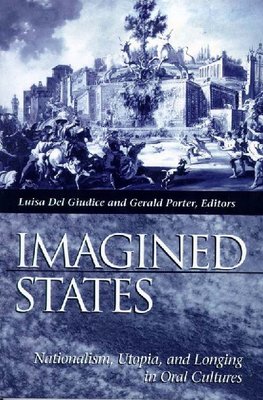
In essays about communities as varied as Alaskan Native, East Indian, Palestinian, Mexican, and African American, oral historians, folklorists, and anthropologists look at how traditional and historical oral narratives live through re-tellings, gaining meaning and significance in repeated performances, from varying contexts, through cultural and historical knowing, and due to tellers' consciousness of their audiences.
-
Los Dos Mundos
Richard Baker
Mexican Americans make up the largest minority in Idaho, yet they seemingly live in a different world from the dominant Anglo population, and because of pervasive stereotypes and exclusive policies, their participation in the community's social, economic, and political life is continually impeded.
This unique ethnographic study of a small Idaho community with a large Hispanic population examines many dimensions of the impact race relations have on everyday life for rural Mexican Americans.
-
Machine Scoring of Student Essays: Truth and Consequences
Patricia Freitag Ericsson and Richard H. Haswell
The current trend toward machine-scoring of student work, Ericsson and Haswell argue, has created an emerging issue with implications for higher education across the disciplines, but with particular importance for those in English departments and in administration. The academic community has been silent on the issue—some would say excluded from it—while the commercial entities who develop essay-scoring software have been very active. Machine Scoring of Student Essays is the first volume to seriously consider the educational mechanisms and consequences of this trend, and it offers important discussions from some of the leading scholars in writing assessment.
-
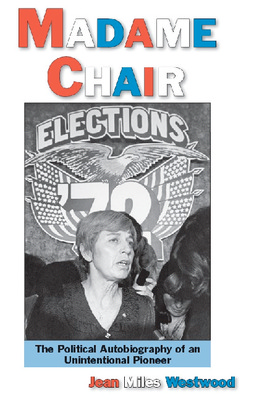
Madame Chair
Jean Miles Westwood
The late Jean Westwood called herself an unintentional pioneer. She did not actively seek or expect to reach what was arguably the most powerful political position any American woman had ever held, chair of the Democratic National Committee. A Utah national committeewoman who time and again had demonstrated her ability to organize effectively and campaign hard, as well as her devotion to reform, Westwood answered George McGovern's call to lead his presidential campaign. In the dramatic year of 1972, she became the first woman to chair a national political party, McGovern lost in a landslide, Nixon was reelected, and a covert operation burglarized Democratic National Committee headquarters at the Watergate. Westwood provides an insider account of a period that reshaped national politics. Second-wave feminism, party reform, and the civil rights and antiwar movements opened up American politics. As a principal in shaping that reform, Jean Westwood not only helped build the road; she traveled it.
-
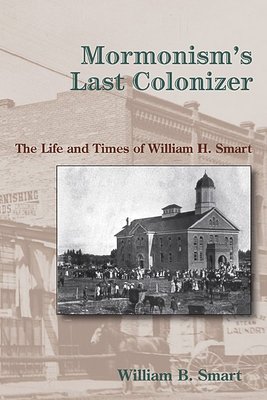
Mormonism's Last Colonizer: The Life and Times of William H. Smart
William B. Smart
By the early twentieth century, the era of organized Mormon colonization of the West from a base in Salt Lake City was all but over. One significant region of Utah had not been colonized because it remained in Native American hands--the Uinta Basin, site of a reservation for the Northern Utes. When the federal government decided to open the reservation to white settlement, William H. Smart--a nineteenth-century Mormon traditionalist living in the twentieth century, a polygamist in an era when it was banned, a fervently moral stake president who as a youth had struggled mightily with his own sense of sinfulness, and an entrepreneurial businessman with theocratic, communal instincts--set out to ensure that the Uinta Basin also would be part of the Mormon kingdom. Included with the biography is a searchable CD containing William H. Smart's extensive journals, a monumental personal record of Mormondom and its transitional period from nineteenth-century cultural isolation into twentieth-century national integration.
-
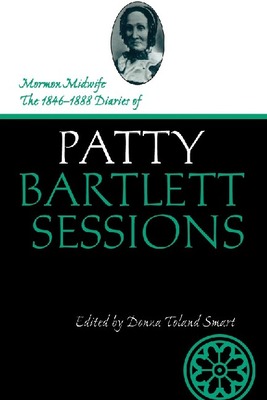
Mormon Midwife
Donna Toland Smart
Patty Session's 1847 Mormon Trail diary has been widely quoted and excerpted, but her complete diaries chronicling the first decades of Mormon settlement at Salt Lake City have never before been published. They provide a detailed record of early Mormon community life from Illinois to Utah through the eyes of Mormondom's most famous midwife. They also recount her important role in women's social networks and her contributions to community health and Utah's economy, to pioneer education and horticulture. Patty Sessions assisted at the births of humdreds of early Mormons and first-generation Utahns, meticulously recording the events. Shed had an active role in the founding of the Relief Society and health organizations. She spoke in tongues and administered spiritually as well as medically to the ill. Her diaries are a rich resource for early Mormon and Utah history.
-
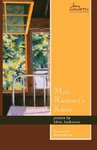
Mrs. Ramsay's Knee
Utah State University Press
May Swenson Poetry Award Volume 12, with foreward by Harold Bloom. Mrs. Ramsay's Knee offers fresh and elegant poems by Idris Anderson, many of them ekphrastic considerations of visual works of art. Among her subjects are paintings by Rembrandt, Rousseau, Pollock, and Chagall, yet she equally explores a set of news photos from the 2006 war between Israel and Hezbollah.
-
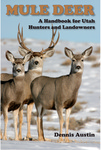
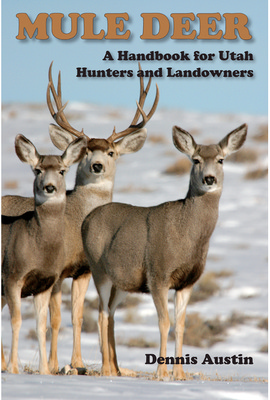
Mule Deer: A Handbook for Utah Hunters and Landowners
Dennis D. Austin
Mule deer are a familiar sight to residents of Utah and the Intermountain West. Sportsmen hunt them, others seek a glimpse of them while hiking or camping, drivers dodge them, and homeowners sometimes delight, sometimes fret as deer visit backyards and gardens. Deer, many of which live in the towns, cities, and farms that sprawl over their historical habitat, sometimes seem ubiquitous. Useful information about them, either scientific or practical, is less widespread. In this handbook, Dennis Austin fills that need for information, offering a one-stop reference packed with up-to-date knowledge and practical advice on mule deer. Data on deer herds, analysis of their habitat and forage needs, their seasonal cycles, understanding of their relationships with livestock and predators, wildlife management policies, what landowners should know about dealing with deer, practical considerations for hunters, and much moreýall can be found here in this complete, well-illustrated guide to the history, biology, hunting, and management of mule deer.
-
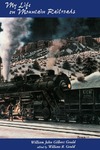
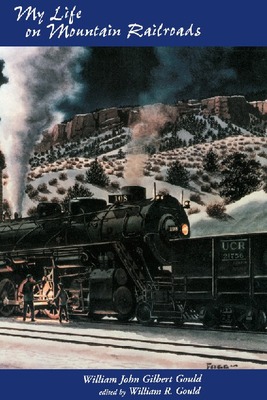
My Life on Mountain Railroads
William John Gilbert Gould
In 1917, Gilbert Gould achieved his dream to be an engineer, and began running engines for the Denver & Rio Grande and later for the Utah Railway. He was a natural storyteller, and his recollections are entertaining and historically rewarding.
-
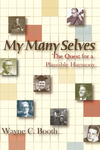
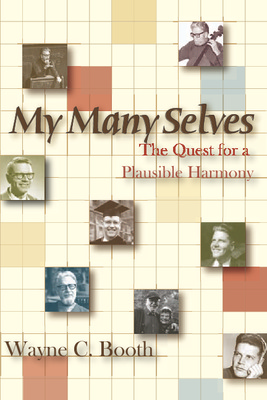
My Many Selves
Wayne C. Booth
Wayne Booth, George M. Pullman Distinguished Service Professor of English at the University of Chicago, was one of the most important literary critics and English scholars of recent times. His books included The Rhetoric of Fiction; Now Don't Try to Reason with Me: Essays and Ironies for a Credulous Age; A Rhetoric of Irony; Modern Dogma and the Rhetoric of Assent; Critical Understanding: The Powers and Limits of Pluralism; The Company We Keep: An Ethics of Fiction; The Vocation of a Teacher; For the Love of It: Amateuring and Its Rivals; The Rhetoric of Rhetoric: The Quest for Effective Communication; and others. Many of them became required reading in college classrooms. His memoir, My Many Selves, is both an incisive self-examination and a creative approach to retelling his life. Writing his autobiography became a quest to harmonize the diverse, discordant parts of his identity and resolve the conflicts in what he thought and believed. To see himself clearly and whole, he broke his self down, personified the fragments, uncovered their roots in his life, and engaged his multiple identities and experiences in dialogue. Basic to his story and to its lifelong concerns with ethics and rhetoric was his youth in rural Utah. He valued that background, while acknowledging its ambiguous influence on him, and continued to identify himself as Mormon, though he renounced most Latter-day Saint doctrines. Wayne Booth died in October 2005, soon after completing work on his autobiography.
-
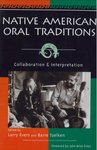
Native American Oral Traditions
Larry Evers and Barre Toelken
This collection provides a benchmark that helps secure the position of collaboration between Native American and non-Native American scholars in the forefront of study of Native oral traditions. Seven sets of intercultural authors present Native American oral texts with commentary, exploring dimensions of perspective, discovery, and meaning that emerge through collaborative translation and interpretation. The texts studied all come from the American West but include a rich variety of material, since their tribal sources range from the Yupik in the Arctic to the Yaqui in the Sonoran Desert.
This presentation of jointly authored work is timely: it addresses increasing interest in, calls for, and movement toward reflexivity in the relationships between scholars and the Native communities they study, and it responds to the renewed commitment in those communities to asserting more control over representations of their traditions. Although Native and academic communities have long tried to work together in the study of culture and literature, the relationship has been awkward and imbalanced toward the academics. In many cases, the contributions of Native assistants, informants, translators, and field workers to the work of professional ethnographers has been inadequately credited, ignored, or only recently uncovered. Native Americans usually have not participated in planning and writing such projects. Native American Oral Traditions provides models for overcoming such obstacles to interpreting and understanding Native oral literature in relation to the communities and cultures from which it comes.
-
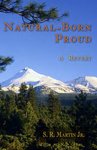
Natural-Born Proud
S. R. Martin Jr.
A young man from Monterey and his younger brother go on their first deer hunt with their minister father and his friends. The setting is 1950s northern California, in country where, from the right height, one can see Mt. Shasta in one direction, Mt. Lassen in the other. It is a region of small, insular towns, and although it is a familiar hunting ground for the Reverend and his buddies, not everyone there welcomes black hunters. Father and son both shoulder their pride, and a racial confrontation seems inevitable.
Among the lessons young Satch learns is the sometime advantage of wit and spine. During their days in the wilderness, the brothers are initiated to the right practice of the hunt and camp and to the ribald talk, needling banter, camp tales, and occasional aggravation of sundry friends. Hunting has a primal nature, but as Satch sees, so may the variable interactions of men.
-
Necessary Light
Utah State University Press
May Swenson Poetry Award Volume 3, with foreward by Mary Oliver. "I think the two attributes that will most impress readers are, first, the almost shimmering gladness with which Ms. Fargnoli replies to the gifts of beauty and of human love; and, second, the compassion with which she addresses whatever is beyond her own intimate surroundings. Whatever it costs her, whatever it takes, there seems to be for Ms. Fargnoli only one world and only one way to live within it: with a ferocity of attention, care, and response." Mary Oliver
-
Neck of the World
Daniel F. Rzicznek
May Swenson Poetry Award Volume 11, with foreward by Alice Quinn. Neck of the World is the eleventh volume in the prestigious May Swenson Poetry Award series. In it, Daniel Rzicznek offers poems that, in quick angular language, capture the natural world and at the same time extend it into a surreal vision, sometimes dream-like, sometimes dark. Alice Quinn, judge for the 2007 Swenson Award, says this of Rzicznek's work: "Throughout, the language pulsates, always vigorous, by turns knotty and crystalline. . . . In Neck of the World, we have a poet with a striking new vision--challenging, rewarding, and bold.
-
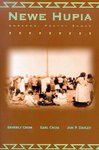
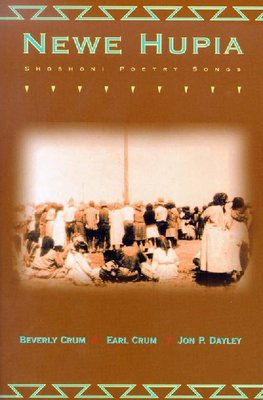
Newe Hupia: Shoshoni Poetry Songs
Beverly Crum, Earl Crum, and Jon P. Dayley
This collection presents written texts of songs in Shoshoni and English, with both figurative and literal translations, and is packaged with a CD containing performances of the songs by Earl and Beverly Crum. The songs fall into several categories based on the contexts of their performances, such as dance songs, medicine songs, and handgame songs. The texts are framed with an introduction and commentary discussing the cultural background, meaning, forms, and performance contexts of the songs; Shoshoni language; and methodology. Glossaries of Shoshoni terms are appended. As the first major linguistic study of Shoshoni songs, Newe Hupia is an important contribution to scholarship. It also marks a significant achievement in the preservation of an important aspect of Shoshoni language and culture. And it has literary value as a presentation of Shoshoni verse and aesthetics. Furthermore, many readers and listeners will find the songs to be lyrical, pleasing to the ear, and evocative of the natural world.
-
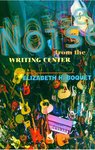
Noise from the Writing Center
Elizabeth H. Boquet
In Noise from the Writing Center, Boquet develops a theory of "noise" and excess as an important element of difference between the pedagogy of writing centers and the academy in general. Addressing administrative issues, Boquet strains against the bean-counting anxiety that seems to drive so much of writing center administration. Pedagogically, she urges a more courageous practice, developed via metaphors of music and improvisation, and argues for "noise," excess, and performance as uniquely appropriate to the education of writers and tutors in the center. Personal, even irreverent in style, Boquet is also theoretically sophisticated, and she draws from an eclectic range of work in academic and popular culture-from Foucault to Attali to Jimi Hendrix. She includes, as well, the voices of writing center tutors with whom she conducted research, and she finds some of her most inspiring moments in the words and work of those tutors. A provocative and path-breaking essay from one of the leading scholars in writing center theory and administration, Noise from the Writing Center is a must-read volume not only for writing center directors and tutors, but also for WPAs, department chairs, compositionists, and anyone with a stake in the role of writing centers in the post-secondary institution.
-
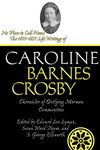
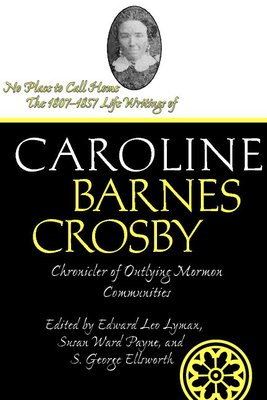
No Place to Call Home: The 1807-1857 Life Writings of Caroline Barnes Crosby, Chronicler of Outlying Mormon Communities
Edward Leo Lyman, Susan Ward Payne, and S. George Ellsworth
Caroline Crosby's life took a wandering course between her 1834 marriage to Jonathan Crosby and conversion to the infant Mormon Church and her departure for her final home, Utah, on New Year's Day, 1858. In the intervening years, she lived in many places but never long enough to set firm roots. Her adherence to a frontier religion on the move kept her moving, even after the church began to settle down in Utah. Despite the impermanence of her situation, perhaps even because of it, Caroline Crosby left a remarkably rich record of her life and travels, thereby telling us not only much about herself and her family but also about times and places of which her documentary record provides a virtually unparalleled view. A notable aspect of her memoirs and journals is what they convey of the character of their author, who, despite the many challenges of transience and poverty she faced, appears to have remained curious, dedicated, observant, and cheerful. From Caroline's home in Canada, she and Jonathan Crosby first went to the headquarters of Joseph Smith's new church in Kirtland, Ohio. She recounts, in a memoir, the early struggles of his followers there. As the church moved west, the Crosbys did as well, but as became characteristic, they did not move immediately with the main body to the center of the religion. For awhile they settled in Indiana, finally reaching the new Mormon center of Nauvoo in 1842. Fleeing Nauvoo with the last of the Mormons in 1846, they spent two years in Iowa and set out for Utah in 1848, the account of which journey is the first of Caroline Crosby's vivid trail journals. The Crosbys were able to rest in Salt Lake City for less than two years before Brigham Young sent them on a church mission to the Society and Austral Islands in the South Pacific. She recorded, in detail, their overland travel to San Francisco and then by sea to French Polynesia and their service on the islands. In late 1852 the Crosbys returned to California, beginning what is probably the most historically significant part of her writings, her diaries of life. First, in immediately post Gold Rush San Francisco and, second, in the new Mormon village of San Bernardino in southern California. There is no comparable record by a woman of 1850s life in these growing communities. The Crosbys responded in 1857 to Brigham Young's call for church members to gather in Utah and again abandoned a new home, this the nicest one they had built, one of the finest houses in San Bernardino. Such unquestioning loyalty was a characteristic Caroline and Jonathan displayed again and again.
-
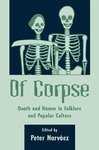
Of Corpse
Peter Narvaez
Laughter, contemporary theory suggests, is often aggressive in some manner and may be prompted by a sudden perception of incongruity combined with memories of past emotional experience. Given this importance of the past to our recognition of the comic, it follows that some "traditions" dispose us to ludic responses. The studies in Of Corpse: Death and Humor in Folklore and Popular Culture examine specific interactions of text (jokes, poetry, epitaphs, iconography, film drama) and social context (wakes, festivals, disasters) that shape and generate laughter. Uniquely, however, the essays here peruse a remarkable paradox-the convergence of death and humor.
Two studies here focus on joke cycles concerning disasters and celebrities, particularly as spawned or mediated through television and the Internet. One offers an exhaustive look at Internet humor that followed "September 11," and the other interprets the influence of television as especially fertile for the proliferation of humor about mass icons and disasters. Other essays examine the social leveling through laughter at festivals and calendar customs associated with Mexican Day-of-the-Dead traditions, and another highlights the role of the Haitian family of playful, erotic death spirits known as Gedes during Carnival. A chapter on The Grateful Dead shows how the folkloric name and ludic iconography of this rock band nurtured participatory, egalitarian cultural scenes of collective merriment. Another essay inspects Weekend at Bernie's, a film employing the humorous manipulation of a corpse-a time-honored folk motif also explored in chapters on the "Irish wake" and the "merry wake." In another essay, we saunter through the contemporary American cemetery, noting the instances and import of humor in gravemarker texts.
Taken together these essays provide a wide variety of interpretations for complex expressive forms that link death and humor, and that appear to unite groups through their own aesthetics of laughter. By letting down their guard together when encountering communications normally judged as unpleasant, people collectively affirm their own taste and "sense" of humor, in the face of official culture and even death itself.
-
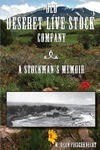
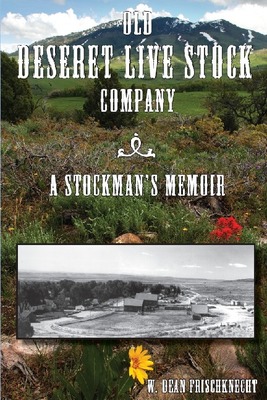
Old Deseret Live Stock Company
W. Dean Frischknecht
In the high country of the northern Wasatch Mountains lies what is left of one of the American West's largest ranches. Deseret Live Stock Company was reputed at various times to be the largest private landholder in Utah and the single biggest producer of wool in the world. The ranch began as a sheep operation, but as it found success, it also ran cattle. Incorporated in the 1890s by a number of northern Utah ranchers who pooled their resources, the company was at the height of successful operations in the mid-twentieth century when a young Dean Frischknecht, bearing a recent degree in animal science, landed the job of sheep foreman. In his memoir, he recounts in detail how Deseret managed huge herds of livestock, vast lands, and rich wildlife, and he recalls through lively anecdotes how stockmen and their families lived and worked in the Wasatch Mountains and Skull Valley's desert wintering grounds.
-
Once Upon a Virus: AIDS Legends and Vernacular Risk Perception
Diane E. Goldstein
Once Upon a Virus explores how contemporary, or "urban," legends are indicators of culturally complex attitudes toward health and illness. Tracing the rich tradition of AIDS legends in relation to current scholarship on belief, Diane Goldstein shows how such stories not only articulate widespread perceptions of risk, health care, and health policy, they also influence official and scientific approaches to the disease and its management. Notions that appear in narratives of who gets AIDS, how and why, are indicators of broad issues involving health beliefs, concerns, and needs.
-
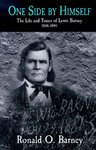
One Side by Himself: The Life and Times of Lewis Barney, 1808-1894
Ronald O. Barney
"What an astonishing life and what a remarkable biography. Lewis Barney's sojourn on the hard edge of the American frontier is a forgotten epic. Not only does this book tell of an amazing personal odyssey from his birth in upstate New York in 1808 to his death in Mancos, Colorado, in 1894, but Barney's tale represents a living evocation of some of the most significant themes in American history. Frederick Jackson Turner theorized that the frontier shaped our national character, but Lewis Barney's life stands as a testament to the real impact of the westering experience on a man and his family. Ron Barney's detailed biography of Lewis Barney provides a participant's view of Mormonism's first six decades of controversy, hardship, and triumph, viewed from the bottom of the social heap. Despite his wide-ranging experience and endless sacrifices, Lewis Barney was a worker in the Mormon vineyard, not one of the princes of the Kingdom of God whose lives have been so exhaustively celebrated. Barney's lack of status in this complex hierarchy adds tremendously to the value of this study, since so much nineteenth-century LDS biography has ignored the lives of ordinary people to celebrate a surprisingly small elite whose experiences were far different from those of the general Mormon population." —Will Bagley, editor of the series Kingdom in the West: The Mormons and the American Frontier and editor of The Pioneer Camp of the Saints: The 1846-1847 Mormon Trail Journals of Thomas Bullock.
-
On Location: Theory and Practice in Classroom-Based Writing Tutoring
Candace Spigelman and Laurie Grobman
Classroom-based writing tutoring is a distinct form of writing support, a hybrid instructional method that engages multiple voices and texts within the college classroom. Tutors work on location in the thick of writing instruction and writing activity. On Location is the first volume to discuss this emerging practice in a methodical way. The essays in this collection integrate theory and practice to highlight the alliances and connections on-location tutoring offers while suggesting strategies for resolving its conflicts. Contributors examine classroom-based tutoring programs located in composition courses as well as in writing intensive courses across the disciplines. While earlier scholarship has focused on logistical and administrative matters, emphasizing, the worthiness of such programs and how to set them up, this volume asks further questions--questions that challenge and even critique classroom-based writing tutoring practices and principles. It poses new theories and offers alternative vantage points from which to reconsider long-standing theoretical controversies. At the same time, the contributors here are cognizant of newcomers' questions regarding logistical/administrative issues, especially as configurations of classroom-based writing tutoring multiply. And in a concluding chapter, the editors suggest strategies for successfully implementing this important instructional practice, and propose future sites of theoretical and practical inquiry.
-

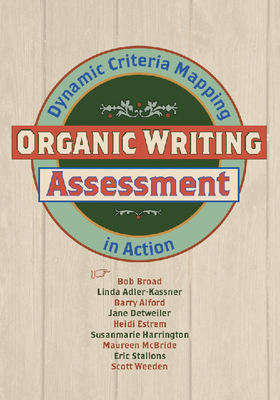
Organic Writing Assessment: Dynamic Criteria Mapping in Action
Bob Broad, Linda Adler-Kassner, Barry Alford, and Jane Detweiler
Educators appropriately strive to create "assessment cultures" (Huot 2002) in which they integrate evaluation into teaching and learning and match assessment methods with best instructional practice. But how do teachers and administrators establish the values that underlie their evaluations? Bob Broad's 2003 volume, What We Really Value, introduced dynamic criteria mapping (DCM) as a method for eliciting locally-informed, context-sensitive criteria for writing assessments. The impact of DCM on writing assessment practice is just beginning to emerge as more and more writing departments and programs adopt, adapt, or experiment with DCM approaches. For the authors of Organic Writing Assessment, the DCM experience provided not only an authentic assessment of their own programs, but a nuanced language through which they can converse in the always vexing, potentially divisive realm of assessment theory and practice. Of equal interest are the adaptations that these writers invented for Broad's original process, to make DCM even more responsive to local needs and exigencies. Organic Writing Assessment represents an important step in the evolution of writing assessment in higher education. This volume documents the second generation in an assessment model that is regarded as scrupulously consistent with current theory; it shows the range of DCM's flexibility, and presents an informed discussion of its limits and its potentials.