

Files
Download Full Text (26.0 MB)
Description
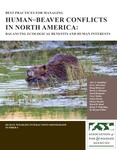
We explore the complexities of managing beaver (Castor canadensis) conflicts in North America, describing the most common approaches used by natural resource management agencies to address conflicts. We identify specific conflicts caused by beavers, the ecological benefits beavers provide, and the tools commonly used to address conflicts. We discuss regional differences in beaver management strategies, including ecosystem restoration and conflict prevention. We specifically discuss a variety of management practices including public education, land use management, trapping, translocation, exclusion, shooting, dam removal, repellants, and harvest incentive programs; we then review the challenges and benefits of these tools. We discuss the need for integrated management strategies that maintain the ecological benefits created by beavers while addressing human–beaver conflicts.
Publisher
Berryman Institute
Publication Date
9-1-2026
Keywords
beaver, beaver management, ecological impact, flood mitigation, historical management trends, human–wildlife conflict, socio-political factors, translocation
Disciplines
Animal Sciences | Ecology and Evolutionary Biology
Creative Commons License

This work is licensed under a Creative Commons Attribution 4.0 License.
Recommended Citation
Sundelius, Alec J.; Altermatt, Jerry; Brimeyer, Doug; Broman, Derek J.; Duquette, Jared; Mosby, Cory; Owens, Falyn; Rossler, Shawn; Ruid, David B.; Wakeling, Brian F.; and White, H. Bryant, "Best Practices for Managing Human–Beaver Conflicts in North America: Balancing Ecological Benefits and Human Interests" (2026). Human–Wildlife Interactions Monographs. 6.
https://digitalcommons.usu.edu/hwi_monographs/6