

Preview
Creation Date
4-6-2026
Description
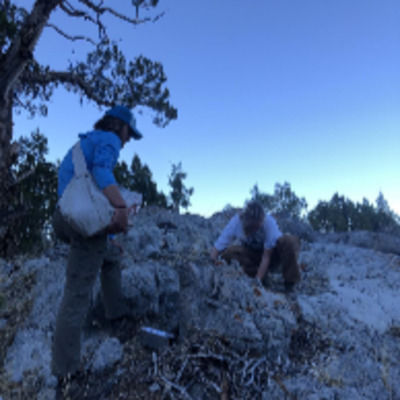
Portrait of Sara Weinstein. Sara Weinstein’s lab studies the ecology and evolution of host–symbiont interactions in mammals—work that often begins with rodents and the diverse organisms that live on or inside them. The team includes a postdoctoral researcher, two graduate students, and seven undergraduate researchers. Their research typically unfolds in three stages. It starts with fieldwork, where the team traps wild rodents across Utah. From there, they move into benchwork, identifying parasites and sequencing microbial communities to understand the genetic makeup of hosts and their symbionts. The final stage centers on bioinformatics and other data analysis to interpret these genetic data. Right now, the lab is especially focused on combining fieldwork with molecular approaches to uncover how hosts and their symbionts influence one another. This includes testing how parasite infections affect both host health and microbiome function, as well as studying how disease dynamics shift in human-altered landscapes. This work reveals the hidden communities every animal carries—organisms that can both help and harm their hosts. By better understanding these relationships, the lab’s research supports improved management and conservation of wildlife such as beavers, free-roaming horses, moose, and mule deer, while also informing the health of domestic animals and humans.
Publisher
Merrill-Cazier Library, Utah State University
Creative Commons License

This work is licensed under a Creative Commons Attribution-Noncommercial 4.0 License
Keywords
mentor, teacher, director, lab, utah, university, presentation, research