
























-
A Field of Dreams: Independent Writing Programs and the Future of Composition Studies
Peggy O'Neill, Angela Crow, and Larry W. Burton
One of the first collections to focus on independent writing programs, A Field of Dreams offers a complex picture of the experience of the stand-alone. Included here are narratives of individual programs from a wide range of institutions, exploring such issues as what institutional issues led to their independence, how independence solved or created administrative problems, how it changed the culture of the writing program and faculty sense of purpose, success, or failure.
-
A History of Utah's American Indians
Forrest S. Cuch
This book is a joint project of the Utah Division of Indian Affairs and the Utah State Historical Society. It is distributed to the book trade by Utah State University Press.
The valleys, mountains, and deserts of Utah have been home to native peoples for thousands of years. Like peoples around the word, Utah's native inhabitants organized themselves in family units, groups, bands, clans, and tribes. Today, six Indian tribes in Utah are recognized as official entities. They include the Northwestern Shoshone, the Goshutes, the Paiutes, the Utes, the White Mesa or Southern Utes, and the Navajos (Dineh). Each tribe has its own government. Tribe members are citizens of Utah and the United States; however, lines of distinction both within the tribes and with the greater society at large have not always been clear. Migration, interaction, war, trade, intermarriage, common threats, and challenges have made relationships and affiliations more fluid than might be expected. In this volume, the editor and authors endeavor to write the history of Utah's first residents from an Indian perspective. An introductory chapter provides an overview of Utah's American Indians and a concluding chapter summarizes the issues and concerns of contemporary Indians and their leaders. Chapters on each of the six tribes look at origin stories, religion, politics, education, folkways, family life, social activities, economic issues, and important events. They provide an introduction to the rich heritage of Utah's native peoples. This book includes chapters by David Begay, Dennis Defa, Clifford Duncan, Ronald Holt, Nancy Maryboy, Robert McPherson, Mae Parry, Gary Tom, and Mary Jane Yazzie.
Forrest Cuch was born and raised on the Uintah and Ouray Ute Indian Reservation in northeastern Utah. He graduated from Westminster College in 1973 with a bachelor of arts degree in behavioral sciences. He served as education director for the Ute Indian Tribe from 1973 to 1988. From 1988 to 1994 he was employed by the Wampanoag Tribe in Gay Head, Massachusetts, first as a planner and then as tribal administrator. Since October 1997 he has been director of the Utah Division of Indian Affairs.
-
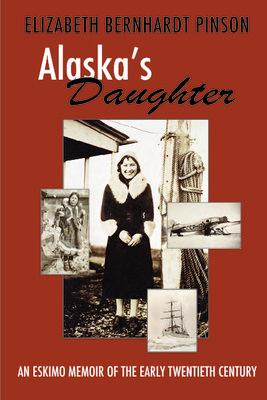
Alaska's Daughter
Elizabeth Bernhardt Pinson
Elizabeth B. Pinson shares with us her memories of Alaska's emergence into a new and modern era, bearing witness to history in the early twentieth century as she recalls it. She draws us into her world as a young girl of mixed ethnicity, with a mother whose Eskimo family had resided on the Seward Peninsula for generations and a father of German heritage. Growing up in and near the tiny village of Teller on the Bering Strait, Elizabeth at the age of six, despite a harrowing, long midwinter sled ride to rescue her, lost both her legs to frostbite when her grandparents, with whom she was spending the winter in their traditional Eskimo home, died in the 1918 influenza epidemic.
Fitted with artificial legs financed by an eastern benefactor, Elizabeth kept journals of her struggles, triumphs, and adventures, recording her impressions of the changing world around her and experiences with the motley characters she met. These included Roald Amundsen, whose dirigible landed in Teller after crossing the Arctic Circle; the ill-fated 1921 British colonists of Wrangel Island in the Arctic; trading ship captains and crews; prospectors; doomed aviators; and native reindeer herders. Elizabeth moved on to boarding school, marriage, and the state of Washington, where she compiled her records into this memoir and where, now in her 90s, she lives.
-
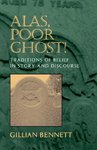
Alas, Poor Ghost!
Gillian Bennett
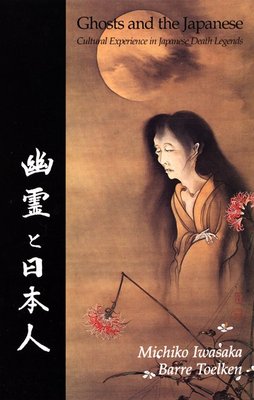
In the rational modern world, belief in the supernatural seemingly has been consigned to the worlds of entertainment and fantasy. Yet belief in other worldly phenomena, from poltergeists to telepathy, remains strong, as Gillian Bennett's research shows. Especially common is belief in continuing contact with, or the continuing presence of, dead family members. Bennett interviewed women in Manchester, England, asking them questions about ghosts and other aspects of the supernatural. (Her discussion of how her research methods and interview techniques evolved is in itself valuable.) She first published the results of the study in the well-received Traditions of Belief: Women and the Supernatural, which has been widely used in folklore and women's studies courses. "Alas, Poor Ghost!" extensively revises and expands that work. In addition to a fuller presentation and analysis of the original field research and other added material, the author, assisted by Kate Bennett, a gerontological psychologist, presents and discusses new research with a group of women in Leicester, England.
Bennett is interested in more than measuring the extent of belief in other worldly manifestations. Her work explores the relationship between narrative and belief. She anticipated that her questions would elicit from her interviewees not just yes or no replies but stories about their experiences that confirmed or denied notions of the supernatural. The more controversial the subject matter, the more likely individuals were to tell stories, especially if their answers to questions of belief were positive. These were most commonly individualized narratives of personal experience, but they contained many of the traditional motifs and other content, including belief in the supernatural, of legends. Bennett calls them memorates and discusses the cultural processes, including ideas of what is a "proper" experience of the supernatural and a "proper" telling of the story, that make them communal as well as individual. These memorates provide direct and vivid examples of what the storytellers actually believe and disbelieve. In a final section, Bennett places her work in historical context through a discussion of case studies in the history of supernatural belief.
-
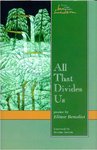
All That Divides Us
Utah State University Press
May Swenson Poetry Award Volume 4, with foreward by Maxine Kumin. Although the poems in this collection are not narrative, they do present a narrative, gradually unspooling the tale of the poet's rebel aunt, who left the family "to marry a Chinaman" in the 1930s. It's an old story, full of poignancy, mystery, family pride, and doubt. When the aunt returns to die, the poet, now grown, discovers in herself the need to reclaim the connections that her family had severed. She travels to China several times—to learn. Gradually, through wide-eyed insightful poems, we see the poet rebuild with her Chinese cousins a sense of generation, family, and humanity—bridging over all that that divides us. Elinor Benedict has also received the Mademoiselle Fiction Prize, a Michigan Council for the Arts Award, and an Editor's Grant from the Coordinating Council of Literary Magazines (CLMP). She earned an M.F.A. in writing from Vermont College and her work has also appeared in various literary journals and in five chapbooks.
-
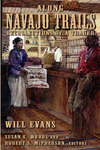
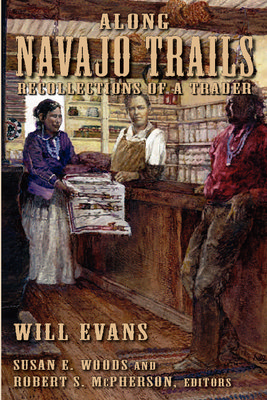
Along Navajo Trails: Recollections of a Trader, 1898-1948
Will Evans
Will Evans's writings should find a special niche in the small but significant body of literature from and about traders to the Navajos. Evans was the proprietor of the Shiprock Trading Company. Probably more than most of his fellow traders, he had a strong interest in Navajo culture. The effort he made to record and share what he learned certainly was unusual. He published in the Farmington and New Mexico newspapers and other periodicals, compiling many of his pieces into a book manuscript. His subjects were Navajos he knew and traded with, their stories of historic events such as the Long Walk, and descriptions of their culture as he, an outsider without academic training, understood it. Evans's writings were colored by his fondness for, uncommon access to, and friendships with Navajos, and by who he was: a trader, folk artist, and Mormon. He accurately portrayed the operations of a trading post and knew both the material and artistic value of Navajo crafts. His art was mainly inspired by Navajo sandpainting. He appropriated and, no doubt, sometimes misappropriated that sacred art to paint surfaces and objects of all kinds. As a Mormon, he had particular views of who the Navajos were and what they believed and was representative of a large class of often-overlooked traders. Much of the Navajo trade in the Four Corners region and farther west was operated by Mormons. They had a significant historical role as intermediaries, or brokers, between Native and European American peoples in this part of the West. Well connected at the center of that world, Evans was a good spokesperson.
Will Evans did not publish his book in his lifetime, but his granddaughter Susan Evans Woods reached that goal with the assistance of historian Robert McPherson, who has authored numerous books on Navajo and Four Corners history. Their edition is illustrated with an equally significant, rare selection of photos from the collections of Evans and his colleagues.
-
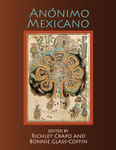
Anonimo Mexicano
Richley Crapo and Bonnie Glass-Coffin
Transcribed from the original Nahuatl manuscript (written circa 1600) and translated into English for the first time, this epic chronicle tells the preconquest history of the Tlaxcalteca, who migrated into central Mexico from the northern frontier of the Toltec empire at its fall. By the time of Cortés's arrival in the sixteenth century, the Tlaxcalteca were the main rivals to the Mexica, or Aztecs, as they are commonly known. One of the few peoples of central Mexico not ruled from the Mexica capital city of Tenochtitlan, the Tlaxcalteca resided in the next valley to the east and became Cortés's powerful allies. They were also speakers of the Nahuatl language who followed a sophisticated agriculturally based urban way of life and documented their history in traditional —painted books —created by specially trained scribes. Thus, their chronicle, Anónimo Mexicano, offers a rare alternative perspective on the history of central Mexico, which has been dominated in the popular imagination by the stories of the Mexica. The original Anónimo Mexicano is housed in the Bibliotheque Nationale de Paris. Its first complete publication here includes a full English translation, the original classical Nahuatl, a modern Nahuatl version, and comprehensive annotation. This definitive edition thus will be valuable for linguists, ethnohistorians, folklorists, Mesoamerican scholars, and others. Moreover, anyone interested in the epic origin tales of peoples and nations will find interest in Anónimo Mexicano's grand narrative of dynastic wars, conquests, and migrations, cast in mythological terms.
-
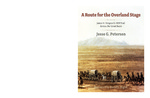
A Route for the Overland Stage
Jesse G. Petersen
The 1859 exploration of the Great Basin by army topographical engineer James Simpson opened up one of the West's most important transportation and communication corridors, a vital link between the Pacific Coast and the rest of the nation. It became the route of the Pony Express and the Overland Mail and Stage, the line of the Pacific telegraph, a major wagon road for freighters and emigrants, and, later, the first transcontinental auto road, the Lincoln Highway, now Highway 50. No one has accurately tracked or mapped Simpson's original route, until now. Jesse Petersen shows in words, maps, and photos exactly where the explorer went. Sharing his detective-like reasoning as he walked or drove the entire trail west and Simpson's variant route returning east, Petersen takes readers on a mountain and desert trek through some of America's most remote and striking landscapes.
-
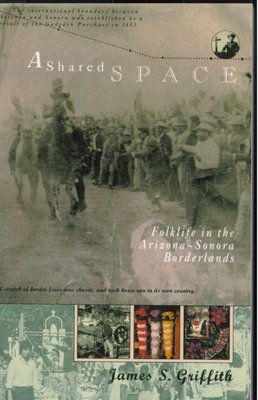
A Shared Space
James S. Griffith
Where it divides Arizona and Sonora, the international boundary between Mexico and the United States is both a political reality, literally expressed by a fence, and, to a considerable degree, a cultural illusion. Mexican, Anglo, and Native American cultures straddle the fence; people of various ethnic backgrounds move back and forth across the artificial divide, despite increasing obstacles to free movement. On either side is found a complex cultural mix of ethnic, religious, and occupational groups. In A Shared Space James Griffith examines many of the distinctive folk expressions of this varied cultural region.
-
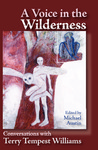
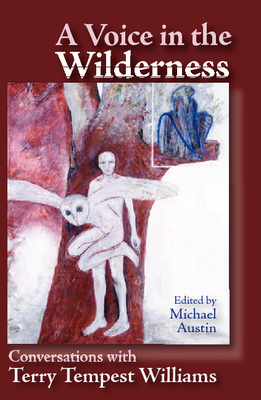
A Voice in the Wilderness
Michael Austin
In her writings, Terry Tempest Williams repeatedly invites us as readers into engagement and conversation with both her and her subject matter, whether it is nature or society, environment or art. From her evocation, in Desert Quartet: An Erotic Landscape, of an eroticism of place that defines erotic as "in relation," to the spiritual connectivity and familial bonds she explores in Refuge: An Unnatural History of Family and Place and the political engagement she urges in The Open Space of Democracy, much of her work is about relationship, connection, and community. Like much good writing, her books invite readers into thoughtful dialogue with the text. Frequently in demand for workshops, lectures, and other speaking venues and well known as an environmental activist, Williams has a public persona and voice almost indistinguishable from her written ones. Thus, the interviews she has often granted--in print, on the radio, on the Web--seamlessly elaborate the ideas and extend the explorations of her written texts. They also tell us much about the genesis, context, and intent of her books. With her distinctive, impassioned voice and familiar felicity of language, she talks about wilderness and wildlife, place and eroticism, art and literature, democracy and politics, family and heritage, Mormonism and religion, writing and creativity, and other subjects that engage her agile mind. The set of interviews gathered and introduced by Michael Austin in A Voice in the Wilderness represent the span of Terry Tempest Williams's career as a naturalist, author, and activist. Michael Austin, professor of English and dean of graduate studies at Shepherd University began collecting Williams's interviews after realizing "that the conversational style of the literary interview is better suited to Terry Tempest Williams than to almost any other writer alive. Throughout her career, she has been engaged in conversations with herself, with her family, with her culture--and, perhaps most importantly, with the land." He shares and introduces a delicious sample of her conversations in A Voice in the Wilderness.
-
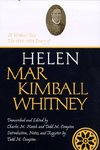
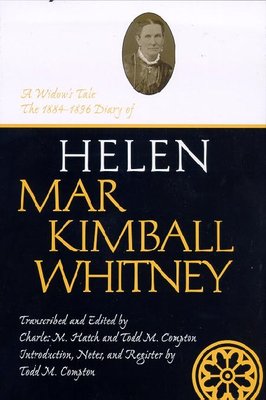
A Widow's Tale: 1884-1896 Diary of Helen Mar Kimball Whitney
Charles M. Hatch and Todd M. Compton
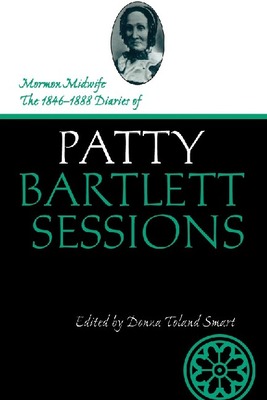
Mormon culture has produced during its history an unusual number of historically valuable personal writings. Few such diaries, journals, and memoirs published have provided as rich and well rounded a window into their authors' lives and worlds as the diary of Helen Mar Kimball Whitney. Because it provides a rare account of the widely experienced situations and problems faced by widows, her record has relevance far beyond Mormon history though. As a teenager Helen Kimball had been a polygamous wife of Mormon founder Joseph Smith. She subsequently married Horace Whitney. Her children included the noted Mormon author, religious authority, and politician Orson F. Whitney. She herself was a leading woman in her church and society and a writer known especially for her defense of plural marriage. Upon Horace's death, she began keeping a diary. In it, she recorded her economic, physical, and psychological struggles to meet the challenges of widowhood. Her writing was introspective and revelatory. She also commented on the changing society around her, as Salt Lake City in the last decades of the nineteenth century underwent rapid transformation, modernizing and opening up from its pioneer beginnings. She remained a well-connected member of an elite group of leading Latter-day Saint women, and prominent Utah and Mormon historical figures appear frequently in her daily entries. Above all, though, her diary is an unusual record of difficulties faced in many times and places by women, of all classes, whose husbands died and left them without sufficient means to carry on the types of lives to which they had been accustomed.
-
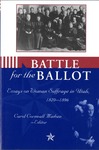
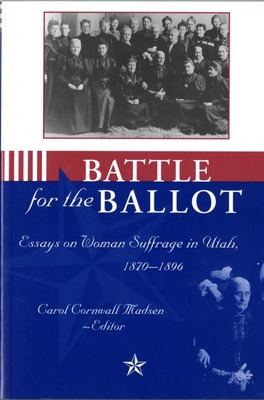
Battle for the Ballot Essays on Woman Suffrage in Utah, 1870- 1896
Carol Cornwall Madsen
Exercising a right that their peers throughout the United States were denied, Utah women voted in 1870 elections. At the time, the only other American women who could vote were in Wyoming territory, and they had not yet had the chance to go to the polls. The more numerous women of Utah would lose the vote as a result of subsequent conflicts between mormons and the federal government over polygamy. However, they regained woman suffrage in the 1896 Utah state constitution, after a hard fought struggle that involved national figures such as Elizabeth Cady Stanton and Susan B. Anthony and local leaders such as Elizabeth Cady Stanton and Susan B. Anthony and local leaders such as Emmeline B. Wells and Emily S. Richards. The sixteen essays in Battle for the Ballot recount the dramatic history of these pacesetting efforts to obtain for Utah women the rights to vote and hold public office.
-
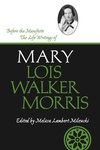
Before the Manifesto: The Life Writings of Mary Lois Walker Morris
Melissa Lambert Milewski
Mary Lois Walker Morris was a Mormon woman who challenged both American ideas about marriage and the U.S. legal system. Before the Manifesto provides a glimpse into her world as the polygamous wife of a prominent Salt Lake City businessman, during a time of great transition in Utah. This account of her life as a convert, milliner, active community member, mother, and wife begins in England, where her family joined the Mormon church, details her journey across the plains, and describes life in Utah in the 1880s. Her experiences were unusual as, following her first husband's deathbed request, she married his brother as a plural wife in the Old Testament tradition of levirate marriage. Mary Morris's memoir frames her 1879 to 1887 diary with both reflections on earlier years and passages that parallel entries in the day book, giving readers a better understanding of how she retrospectively saw her life. The thoroughly annotated diary offers the daily experience of a woman who kept a largely self-sufficient household, had a wide social network, ran her own business, wrote poetry, and was intellectually curious. The years of "the Raid" (federal prosecution of polygamists) led Mary and Elias Morris to hide their marriage on "the underground," and her to perjury during Elias's trial for unlawful cohabitation. The book ends with Mary Lois's arrival at the Salt Lake Depot after three years in exile in Mexico with a polygamist colony.
-
Beneath These Red Cliffs
Ronald L. Holt
In this new and updated edition---with a foreword by Lora Tom, chairwoman of the Paiute Indian Tribe of Utah---Holt recounts the survival of a people against all odds. A compound of rapid white settlement of the most productive Southern Paiute homelands, especially their farmlands near tributaries of the Colorado River; conversion by and labor for the Mormon settlers; and government neglect placed the Utah Paiutes in a state of dependency that ironically culminated in the 1957 termination of their status as federally recognized Indians. The recognition and attendant services were not restored until 1980, but the act revived the Paiutes' identity, self-government, land ownership, and sense of possibility.
-
Between Talk and Teaching: Reconsidering the Writing Conference
Laurel Johnson Black
The teacher-student conference is standard in the repertoire of teachers at all levels. Because it's a one-to-one encounter, teachers work hard to make it comfortable; but because it's a pedagogical moment, they hope that learning occurs in the encounter, too. The literature in this area often suggests that a conference is a conversation, but this doesn't account for a teacher's need to use it pedagogically. Laurel Johnson Black's new book explores the conflicting meanings and relations embedded in conferencing and offers a new theoretical understanding of the conference along with practical approaches to conferencing more effectively with students.
-
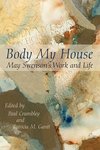
Body My House: May Swenson's Work and Life
Paul Crumbley and Patricia M. Gantt
The first collection of critical essays on May Swenson and her literary universe, Body My House initiates an academic conversation about an unquestionably major poet of the middle and late twentienth century. Includes many previously unpublished Swenson poems. Essays here address the breadth of Swenson's literary corpus and offer varied scholarly approaches to it. They reference Swenson manuscripts---poems, letters, diaries, and other prose---some of which have not been widely available before. Chapters focus on Swenson's work as a nature writer; the literary and social contexts of her writing; her national and international acclaim; her work as a translator; associations with other poets and writers (Bishop, Moore, and others); her creative process; and her profound explorations of gender and sexuality. The first full volume of scholarship on May Swenson, Body My House suggests an ambitious agenda for further work. Between the 1950s and the 1980s, May Swenson produced eleven volumes of poetry, received many major awards, was elected chancellor of the Academy of American Poets, and was acclaimed by writers in virtually every school of American poetry.
-
Borgo of the Holy Ghost
Stephen Mcleod
May Swenson Poetry Award Volume 5, with foreward by Richard Howard. An accomplished poet with credits in such literary magazines as APR, Paris Review, Ploughshares, and many others, Stephen McLeod is the 2001 recipient of the May Swenson Poetry Award. Judge for the competition was Richard Howard, internationally known poet and winner of the Pulitzer and many other poetry awards. Formerly of Dallas, Mr. McLeod lives in Brooklyn, where he is an Assistant District Attorney. He was educated at Southern Methodist University, Columbia University, and the Fordham University School of Law.
-
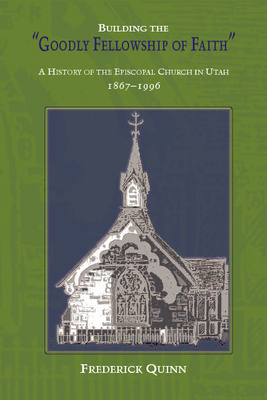
Building the "Goodly Fellowship of Faith"
Frederick Quinn
As this critical, independent history, which ends with the ordination of one of the first women bishops in the nation, shows, Utah Episcopalians have had, despite small numbers, a remarkably eventful and significant history, which included complex relations with Mormons and Native Americans, early experience of women and homosexuals in the ministry, and a fascinating set of bishops. Among the latter were Daniel Tuttle, a leading figure in Episcopal history; Christian socialist and Social Gospel proponent Frank Spencer Spalding; and Paul Jones, forced to resign because of his pacifism during WWI. Frederick Quinn, an Episcopal priest and historian, is adjunct professor of history at Utah State University and adjunct professor of political science at the University of Utah. His previous books include Democracy at Dawn, Notes From Poland and Points East, a TLS International Book of the Year, and African Saints, Martyrs, and Holy People, a Black Catholic Congress Book of the Month. A former chaplain at Washington National Cathedral, he holds a doctorate in history from the University of California at Los Angeles.
-
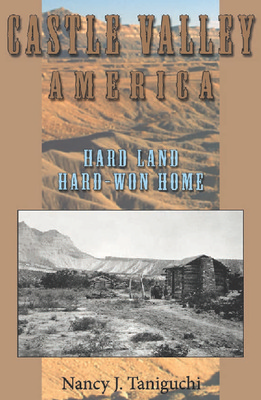
Castle Valley, America
Nancy Taniguchi
This is American history told through the stories of an atypical, for Utah, region. Castle Valley is roughly conterminous with two counties, Carbon and Emery, which together formed a rural, industrial enclave in a mostly desert environment behind the mountain range that borders Utah's principal corridor of settlement. In Castle Valley, coal mining and the railroad attracted diverse, multiethnic communities and a fair share of historic characters, from Butch Cassidy, who stole its largest payroll, to Mother Jones, who helped organize its workers against its mining companies. Among the last major segments of the state to be settled, it was also a generally poor region that stretched the capabilities of people to scratch a living from a harsh landscape. The people of Castle Valley experienced complex, unusual combinations of both social cohesion and conflict, but they struggled through poverty, labor disputes, major mining disasters, and other challenges to build communities whose stories reflected the historical course of the nation as a whole. In order to convey her subject's both unique and representative qualities, Nancy Taniguchi has written an epic history that is not just local history, but American history written locally. Nancy J. Taniguchi, who lived for thirteen years in Castle Valley and was previously on the faculty of the College of Eastern Utah in Price, is professor of history at California State University, Stanislaus. She is the author of numerous published articles in mining, legal, women's, western, and Utah history and of one book, Necessary Fraud: Progressive Reform and Utah Coal.
-
Cemeteries & Gravemarkers Voices of American Culture
Richard E. Meyer
Even the most detailed, disciplined, and rigorous analysis of cemetery data cannot mask the underlying thrill of discover that invariably accompanies this work. Reading this volume will make this quite clear; it is an important contribution to gravestone and cemetery studies.
-
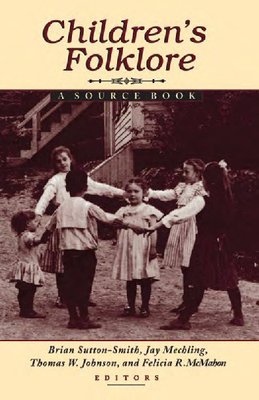
Children's Folklore
Brian Sutton-Smith, Jay Mechling, Thomas W. Johnson, and Felicia R. McMahon
A collection of original essays by scholars from a variety of fields—including American studies, folklore, anthropology, psychology, sociology, and education—Children's Folklore: A Source Book moves beyond traditional social-science views of child development. It reveals the complexity and artistry of interactions among children, challenging stereotypes of simple childhood innocence and conventional explanations of development that privilege sober and sensible adult outcomes. Instead, the play and lore of children is shown to be often disruptive, wayward, and irrational. The contributors variably con-sider and demonstrate "contextual" and "textual" ways of studying the folklore of children. Avoiding a narrow definition of the subject, they examine a variety of resources and approaches for studying, researching, and teaching it. These range from surveys of the history and literature of children's folklore to methods of field research, studies of genres of lore, and attempts to capture children's play and games.
-
Coming to Terms: A Theory of Writing Assessment
Patricia Lynne
In a provocative book-length essay, Patricia Lynne argues that most programmatic assessment of student writing in U.S. public and higher education is conceived in the terms of mid-20th century positivism. Since composition as a field had found its most compatible home in constructivism, she asks, why do compositionists import a conceptual frame for assessment that is incompatible with composition theory? By casting this as a clash of paradigms, Lynne is able to highlight the ways in which each theory can and cannot influence the shape of assessment within composition. She laments, as do many in composition, that the objectively oriented paradigm of educational assessment theory subjugates and discounts the very social constructionist principles that empower composition pedagogy. Further, Lynne criticizes recent practice for accommodating the big business of educational testing—especially for capitulating to the discourse of positivism embedded in terms like "validity" and "reliability." These terms and concepts, she argues, have little theoretical significance within composition studies, and their technical and philosophical import are downplayed by composition assessment scholars. There is a need, Lynne says, for terms of assessment that are native to composition. To open this needed discussion within the field, she analyzes cutting-edge assessment efforts, including the work of Broad and Haswell, and she advances a set of alternate terms for evaluating assessment practices, a set of terms grounded in constructivism and composition. Coming to Terms is ambitious and principled, and it takes a controversial stand on important issues. This strong new volume in assessment theory will be of serious interest to assessment specialists and their students, to composition theorists, and to those now mounting assessments in their own programs.
-
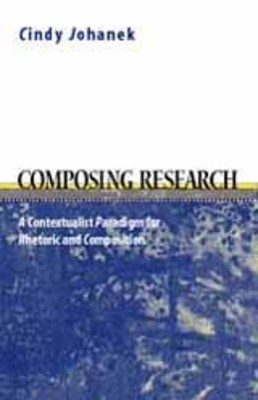
Composing Research: A Contextualist Paradigm for Rhetoric and Composition
Cindy Johanek
In Composing Research, Cindy Johanek offers a new perspective on the ideological conflict between qualitative and quantitative research approaches, and the theories of knowledge that inform them. With a paradigm that is sensitive to the context of one's research questions, she argues, scholars can develop less dichotomous forms that invoke the strengths of both research traditions. Context-oriented approaches can lift the narrative from beneath the numbers in an experimental study, for example, or bring the useful clarity of numbers to an ethnographic study.
-
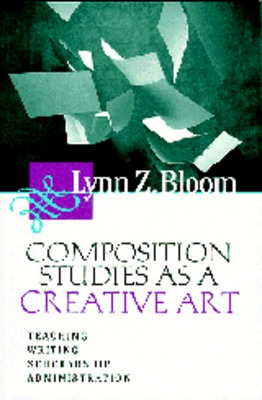
Composition Studies as a Creative Art: Teaching, Writing, Scholarship, Administration
Lynn Z. Bloom
This work focuses on the creative dynamics that arise from the interrelation of writing, teaching writing, and ways of reading—and the scholarship and administrative issues engendered by it. To regard composition studies as a creative art is to engage in a process of intellectual or aesthetic free play, and then to translate the results of this play into serious work that yet retains the freedom and playfulness of its origins. The book is fueled by a mixture of faith in the fields that compose composition studies, hope that efforts of composition teachers can make a difference, and a sense of community in its broadest meaning.
-
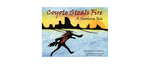
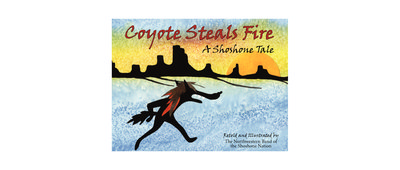
Coyote Steals Fire
Northwest Band Shoshone Nation
"Coyote was tired of being cold," says this traditional Shoshone tale about the arrival of fire in the northern Wasatch region.
Members of the Northwestern Band of the Shoshone Nation developed the concept for this retelling in collaboration with book arts teacher Tamara Zollinger. Together, they wrote and illustrated the book.
Bright watercolor-and-salt techniques provide a winning background to the hand-cut silhouettes of the characters. The lively, humorous story about Coyote and his friends is complemented perfectly by later pages written by Northwestern Shoshone elders on the historical background and cultural heritage of the Shoshone nation.
An audio CD with the voice of Helen Timbimboo telling the story in Shoshone and singing two traditional songs makes this book not only good entertainment but an important historical document, too.
Sure to delight readers of all ages, Coyote Steals Fire will be a valuable addition to the family bookshelf, elementary classroom, and the school or public library.